
Hardin County General Hospital CEO weighs in on talk of closure
By Jennifer Lane
Editor
With the consideration, passing, and now signing of the “One Big Beautiful Bill” by President Donald J. Trump on July 4, 2025, there has been much talk in the media and throughout the public of closures of “at risk” hospitals in the United States.
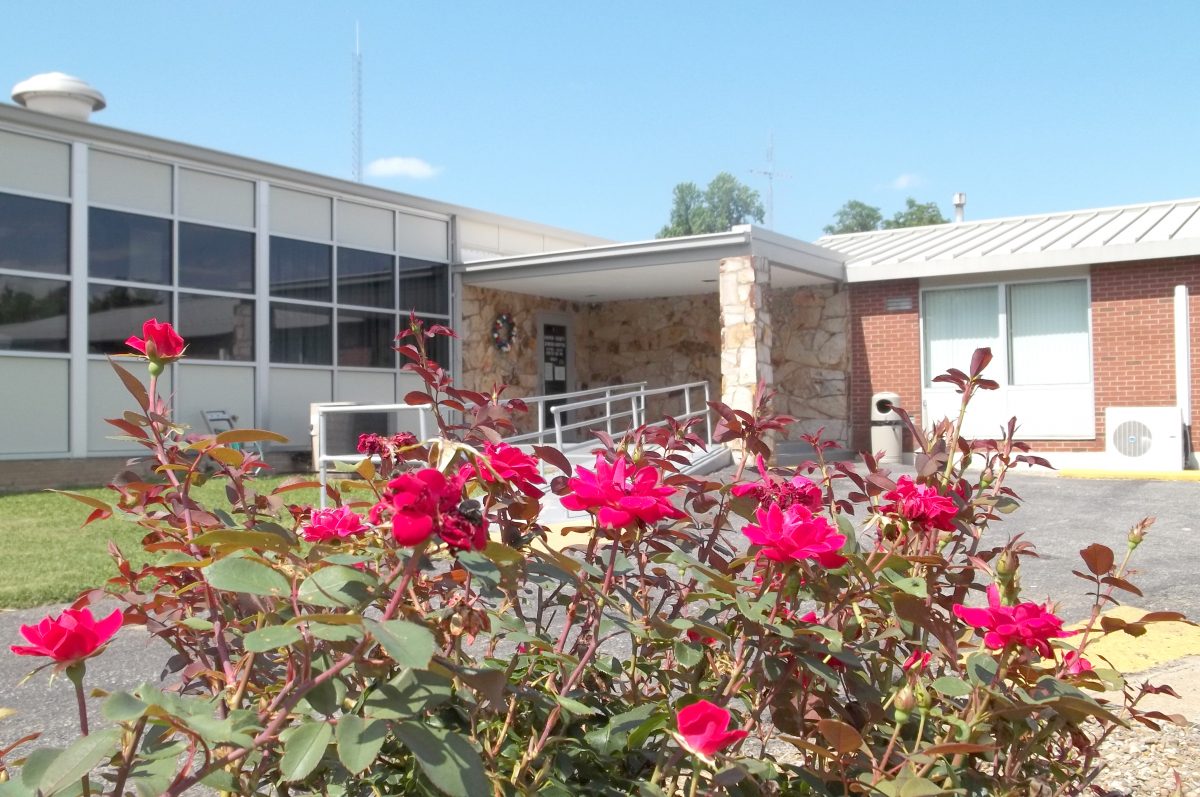
Hardin County General Hospital (HCGH) in Rosiclare was one of the nine Illinois “at risk” hospitals that were mentioned in a letter written by U.S. Senator Edward J. Markey, U.S. Senator Jeffrey A. Merkley, U.S. Senator Ron Wyden, and U.S. Senator Charles E. Schumer sent to President Trump, Speaker of the House Mike Johnson, and Majority Leader John Thune in mid June. The purpose of the letter was for officials to reconsider and prevent cuts to Medicaid and Affordable Care Act (ACA) insurance plans detailed in the bill … as they wrote “ these cuts will have devastating consequences for health outcomes and costs, jobs, and the economic success of rural communities.”
The Cecil G. Sheps Center for Health Services Research at the University of North Carolina (Sheps Center) compiled and provided the report of “at risk” hospitals throughout America and it was included with the letter.
The financial criteria from Sheps Center’s report that categorizes a hospital as “at risk” are as follows: (1) the hospital is in the top 10% Medicaid payer mix of rural hospitals across the country, (2) the hospital has experienced three consecutive years of negative total margin. These rural hospitals face greater risk of being forced to stop providing some services, converting, or closing.
Roby Williams, Hardin County General Hospital CEO of over 51 years, weighed in on the situation. Since talk of hospital closures has been in the news, Williams himself has been trying to interpret the information and misinformation he is receiving from all sides. He said now that they have the detail of the law, they are studying the effects it will have on the hospital.
In the Sheps Center report included with the letter to Trump, it indicated that the two criteria were to be considered in finding “at risk” hospitals, but it said that the hospital could have one or both of the criteria.
Williams said, “Hardin County General Hospital has had only two years in the last eight that we had a negative total margin… and those weren’t even consecutive.”
The only criteria HCGH met for this report was the top 10% Medicaid payer mix.
Being the smallest county in Illinois, even with its service area, HCGH doesn’t put out huge financial numbers and that often plays an adverse part in these conversations. Williams said as CEO he has been in this position over and over through the years, and has faced cuts in funding, and talks of closure or reduced service, but the hospital has always pulled through it.
“I don’t want to downplay the impacts of the law that ultimately will affect us, but by the same token I don’t want to create panic in the community either,” said Williams. “We’re not there yet. We’re not going to go down in the next short period of time. There is no immediate concern of the hospital closing, allowing time to get some of the more onerous reduction to be mitigated before their effective date, and allow us to make the needed adjustments.”
Adding to the struggle –
In the bill, with cuts in Medicaid and ACA, Williams said the burden is being shifted from the government to hospitals. There will be so many patients without any healthcare coverage.
“We have the government saying we are not going to pay for them. We’ve got the same government telling us to take care of them, so even if we didn’t have a conscience, by law we have to treat them whether they pay or not,” he said.
On January 1, 2026, those on Medicaid will need to prove their eligibility every 6 months. Williams said changes will be caught more quickly, so they might lose Medicaid depending on changes in income or other factors. Another factor in this is that people often ignore the requests from Medicaid to fill out the complicated paperwork, having their benefits cancelled even if they would have been eligible for the coverage.
In addition to the effects of the bill that was passed, Williams said there are many other factors that contribute adversely to the hospital’s fight to stay open.
“Wages have gone through the overhead, which we have to pay at a competitive wage or we can’t staff. If we can’t staff then we can’t have a hospital. Equipment costs, contract costs, utility costs and supply costs have all gone up,” he said.
Bill changes in phases –
Because HCGH is a Critical Access Hospital, there are at least two programs that provide additional funding currently. The Illinois Hospital Assessment Program will have a freeze applied on any increases and then over time there will be a reduction in payments. There will be reductions on the State Directive Payments too. In other words, Williams said, for now there will be no changes in funding, but reductions are planned to occur beginning October 1, 2027, two years from now. The reductions will be 0.5% annually from 2028 to 2032, reaching a total of 3.5%. These will be phased in at a rate to allow for adjustments to be made within hospitals.
With the major reductions not occurring for a few more years, Williams said, “I am hopeful. We have time.”
There is a lot to be done on this end and the legislators’ end, Williams added.
Another piece that will help the hospital’s situation is the Rural Health Transformation Program, that is written within the bill. It gives 50 billion additional reimbursement to small, rural hospitals. Fifty percent of this money will be distributed equally between all states that have an application in and approved by December 31, 2025. Williams plans to start working right away with the Illinois Hospital Association, politicians, and the State to make sure that the application gets submitted for Illinois by the deadline in December.
Every source of help will be critical and Williams is reasonably sure that other things will be proposed because he plans to be an active part in it.
“There are a few things that have allowed the hospital to exist,” said Williams. “One of those is that we really do get good community support. That is something that we certainly want to continue.”
Secondly, Williams said he is fully impressed with his staff and things they have done on their own to help the hospital and patients.
Even in the seriousness of this situation, Williams remains hopeful saying he doesn’t see any way that everything involving health care in Hardin County will shut down, not in the near term or long term. He said he can’t guarantee that the hospital will always be able to provide every service it does now, but he feels they can make a case and get enough support to stay open in some way or another.
It’s obvious that HCGH has saved so many lives, especially of those coding as they come through the Emergency Room (ER) doors. Those are the people who might not have made it to the next ER down the road.
How the community can help –
When asked what the community could do to help HCGH in this fight, Williams said, “Now more than ever we need the community’s support.” He said there is no need for patients to panic to find another doctor or move their care elsewhere, but to remain hopeful. He appreciates hearing and seeing the community’s concern shown since the bill was being discussed and now signed. Williams said the hospital is continually looking to the future and working to bring great medical care to the area. They are serving patients just the same as before and hiring prospective employees … soon a new doctor will be announced.
The other 8 –
The following listed are the other 8 Illinois hospitals compiled in the Sheps Center report deemed “at risk”:
• Katherine Shaw Bethea Hospital, Dixon, IL
• OSF Sacred Heart Medical Center, Danville, IL
• Richland Memorial Hospital, Olney, IL
• Harrisburg Medical Center Inc., Harrisburg, IL
• Hoopeston Community Memorial Hospital, Hoopeston, IL
• Franklin Hospital, Benton, IL
• Massac Memorial Hospital, Metropolis, IL
• Crawford Memorial Hospital, Robinson, IL.
The full report listed 338 hospitals “at risk” nationwide.
About HCGH – Located in the heart of the Shawnee National Forest in Southern Illinois, Hardin County General Hospital has been serving the public for over 50 years. Originally built in 1958 with the help of the mining companies of Hardin County and the Federal government, the hospital was built as a state of the art facility providing much needed medical care to area residents. The community recognized the need for a new facility in 1953, and only 5 years later construction was complete. This was made possible by the generous donations of land and funds by the Aluminum Company of America, Ozark Mahoning Mining company, the Fluorspar Division of Minerva Oil Company, the Ford Foundation, Federal Government grants and public donations.
Since construction was completed in 1958 it has been modernized, expanded, and renovated. Staff are continually promoting progress with the addition of new technologies, services, and equipment. The goal is to offer the best quality patient care with the most caring, qualified, and professional personnel, and medical staff available. The medical and non-medical staff are continually attending educational seminars to keep abreast of the latest technology and information available to make certain they always give optimum patient care.
Published in the July 17, 2025 Hardin County Independent!
Subscribe! $40 in Hardin County, $42 Elsewhere, $35 e-Edition. Subscribe online or call 618-287-2361.



Hardin county was my hometown, I’m absolutely terrified for this hospital and I think the outlook is extremely grim. There is nothing anyone can do except “remain hopeful.” Most of the residents can’t move in the worst case scenario of the hospital shutting down.
The loss of industry and population has also hurt the viability of the hospital. Illinois’, in particular Chicago’s deficit budgets for years has also harmed the smaller areas of the state.
Condolences Barbara, I see that you do have an extender family and I trust they surround you with loving arms and care.